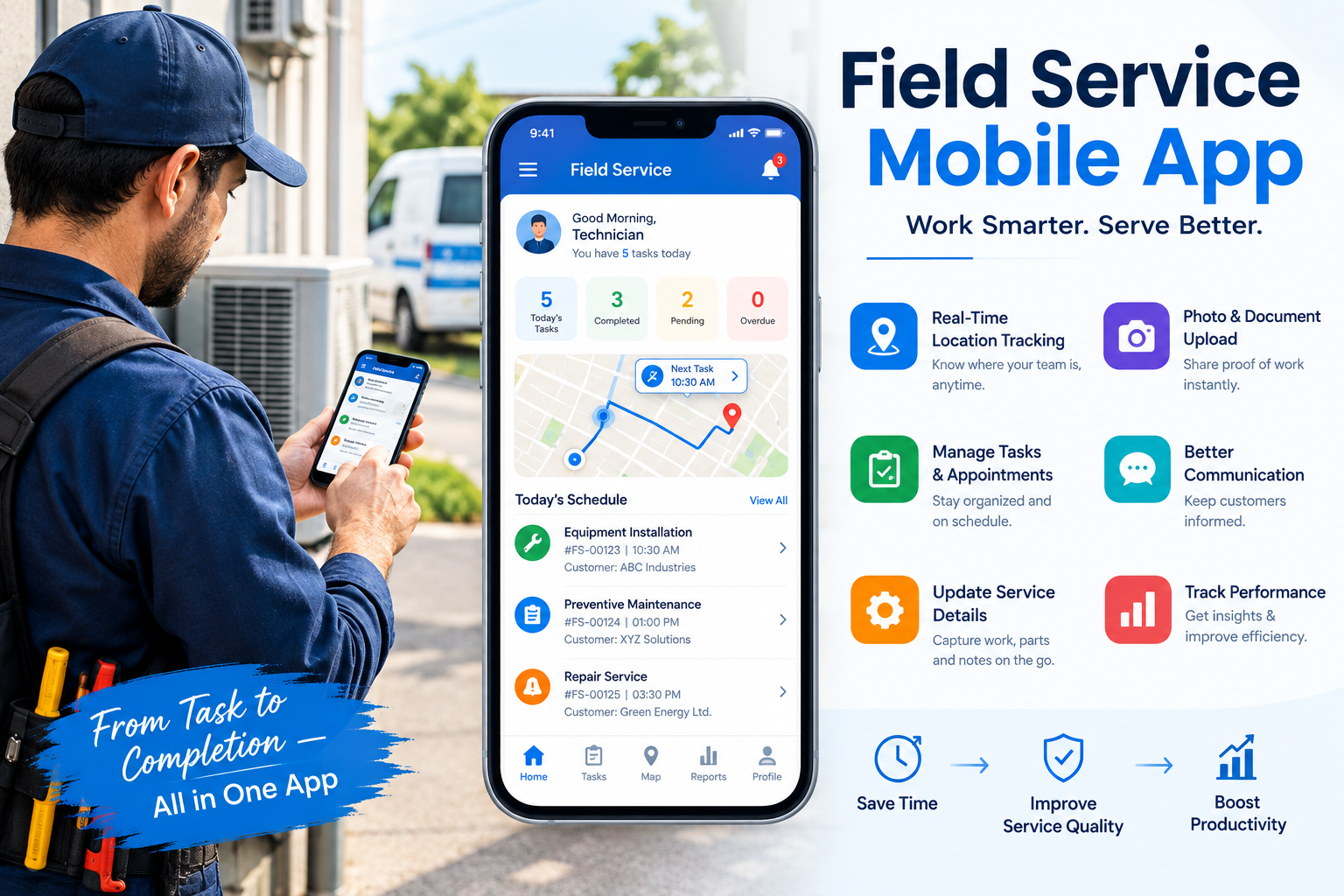
Customers rarely see what happens behind the scenes of a field service appointment. They do not see dispatchers balancing workloads, technicians traveling between locations, or teams reorganizing assignments when unexpected problems arise. What customers do notice is whether a technician arrives when expected and whether the visit feels organized.
That makes service scheduling an important part of the customer experience. A well-planned schedule can help field organizations reduce delays, create realistic technician workloads, respond effectively to urgent requests, and provide customers with more dependable appointment expectations.
Improving scheduling is therefore not simply an administrative exercise. It can influence productivity, workforce efficiency, communication, and customer confidence.
Why Field Service Delays Happen
Late appointments are not always caused by technicians working slowly. In many cases, the underlying problem begins with the schedule itself.
Planners may underestimate job duration, overlook travel requirements, assign too many appointments to one employee, or leave insufficient flexibility for unexpected situations.
When one appointment falls behind, every later assignment can be affected.
Effective service scheduling considers these risks before the working day begins.
Unrealistic Schedules Create a Domino Effect
Imagine a technician receives five appointments with very little time between them.
The first job takes 20 minutes longer than planned. Heavy traffic then delays the journey to the second location. By midday, the technician may already be significantly behind schedule.
Building realistic time allowances into the schedule can reduce this domino effect.
Understand the True Duration of Each Job
Not every appointment requires the same amount of time.
A routine task may be completed quickly, while a complex assignment could require significantly longer. Treating every job as an identical calendar slot can create unrealistic expectations.
Service scheduling becomes more accurate when planners consider the likely duration and complexity of each assignment.
Use Previous Experience to Improve Planning
Historical operational patterns can provide useful guidance.
If a particular category of work regularly requires more time than expected, planners can adjust future appointment windows accordingly.
Learning from completed assignments allows organizations to replace assumptions with more practical scheduling decisions.
Account for Travel Between Customers
Technicians cannot move instantly from one appointment to another.
Travel must be treated as part of the working day rather than as unused space between jobs.
Poorly organized routes can create delays even when individual appointments finish on time.
Effective service scheduling considers customer locations when arranging the sequence of work.
Avoid Unnecessary Backtracking
A technician who repeatedly crosses the same service territory spends valuable time traveling rather than completing assignments.
Grouping appointments more logically can reduce unnecessary movement.
However, geography should not be considered alone. Technician skills, customer commitments, job priorities, and expected duration must also influence assignment decisions.
The objective is to create a practical route rather than simply the shortest route.
Match Jobs With Technician Capabilities
Sending the nearest technician is not always the most effective choice.
Some assignments require specialized experience or particular technical knowledge. If the selected employee cannot complete the work efficiently, the business may need additional assistance or another visit.
Service scheduling should therefore consider whether the technician is suitable for the assignment.
Preparation Can Prevent Avoidable Delays
A technician who understands the job requirements before arriving can approach the appointment more efficiently.
Planners should consider the available information about the request when allocating work.
Better matching can reduce situations where employees arrive only to discover that the assignment requires capabilities they do not have.
Build Flexibility Into the Working Day
A schedule that looks perfectly efficient on paper may perform poorly in real conditions.
Unexpected situations are normal in field service. Customers may cancel, appointments can take longer than anticipated, and urgent work may appear without warning.
Leaving reasonable flexibility can help organizations absorb these disruptions.
Avoid Scheduling Every Minute
Maximizing technician utilization does not mean filling every minute with planned work.
Overloading employees leaves little room for travel variation or unexpected complications.
Service scheduling should create productive workloads while recognizing that field environments are unpredictable.
A small amount of flexibility can prevent one disruption from affecting an entire day’s appointments.
Respond Quickly to Urgent Requests
Emergency assignments create a difficult scheduling challenge.
The business must respond quickly without unnecessarily disrupting existing customers.
Dispatchers need to determine which technician can handle the request and how moving that employee will affect later appointments.
A structured service scheduling process can make these decisions easier.
Look Beyond Immediate Availability
The first technician with an open slot may not be the best option.
Dispatchers should consider location, expertise, workload, upcoming appointments, and the urgency of existing assignments.
Taking a broader view helps teams respond to priority work while minimizing secondary disruption.
Balance Technician Workloads
Uneven schedules can contribute to delays.
One employee may have more assignments than can reasonably be completed, while another technician has unused capacity.
This imbalance reduces overall workforce efficiency.
Service scheduling helps planners distribute work based on realistic capacity rather than simply adding jobs to whichever schedule appears convenient.
Measure Workload by Effort
The number of appointments alone does not provide a complete picture.
Three complex assignments may represent more work than six short visits. Long travel distances can also make a seemingly light schedule difficult.
Balanced planning should consider the actual effort required throughout the day.
Strengthen Customer Communication
Even well-planned schedules sometimes change.
When delays cannot be avoided, clear communication becomes especially important. Customers are more likely to become frustrated when they do not know what is happening.
Better service scheduling gives office teams clearer operational context when responding to appointment questions.
Set More Realistic Expectations
Customer satisfaction can improve when businesses make achievable commitments.
Promising an unrealistic arrival time may secure an appointment initially, but missing that commitment can damage confidence.
Realistic scheduling supports more dependable expectations and reduces the need for repeated changes.
Review Scheduling Performance Regularly
Scheduling improvement should be continuous.
Managers can examine appointment duration, technician utilization, travel patterns, delays, cancellations, and workload distribution to identify recurring problems.
These insights can reveal where existing assumptions need adjustment.
Turn Daily Challenges Into Future Improvements
A recurring delay is useful information.
If technicians consistently struggle to complete certain routes on time, planners can reorganize future assignments. If specific jobs regularly exceed expected durations, appointment windows can be revised.
Over time, service scheduling can become increasingly accurate as teams learn from actual field activity.
Conclusion
Reliable field service begins long before a technician reaches the customer. It starts with decisions about who should perform each assignment, when the appointment should occur, how much time it requires, and how the technician will travel between locations.
Effective service scheduling brings these considerations together. It can help reduce unnecessary delays, balance workloads, improve technician-job matching, and create more realistic customer expectations.
The strongest schedules are not necessarily the fullest ones. They are the schedules that reflect real working conditions while maintaining enough flexibility to respond when circumstances change. By treating scheduling as an ongoing operational discipline, field organizations can create more productive days for technicians and more dependable experiences for customers.