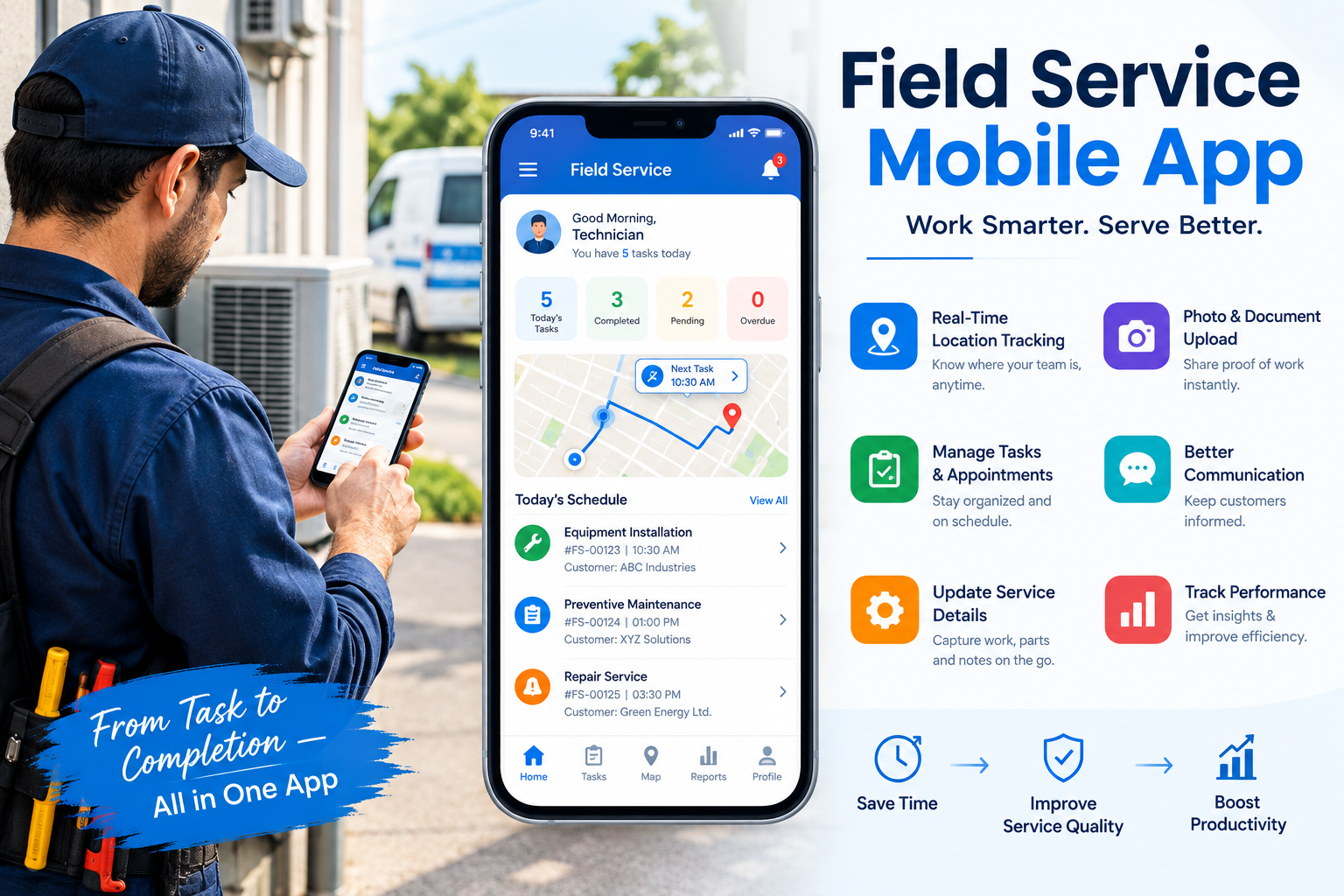
Rosa runs three Tex-Mex food trucks that rotate through East Austin and the tech corridor near the domain, and two years ago her entire ordering system was a handwritten ticket pad and a line that sometimes stretched around the block during a lunch rush. A regular customer, an engineer at one of the tech companies that had moved an office nearby, asked her once why she didn’t have an app. She laughed it off at the time. She doesn’t anymore. Her trucks now run mobile ordering, a loyalty program, and real-time location tracking, and the line moves considerably faster because half her customers already paid and chose a pickup window before they ever walked up.
That shift, a food truck owner building the kind of mobile infrastructure a tech startup would build, is a small but genuine example of what happens when a mobile app development company in Austin operates inside a city where the tech sector itself accounts for roughly a fifth of the entire local economy. Austin isn’t just home to the companies building mobile apps for the rest of the world. The city’s own business culture has absorbed that technology into how even a food truck or a landscaping company now competes for the same customers’ attention.
Austin’s Tech Boom Changed What Every Local Business Is Competing Against
The numbers behind Austin’s tech growth are substantial enough that they’ve reshaped customer expectations well beyond the tech industry itself. The sector now employs well over 100,000 people locally, major employers from Apple to Tesla to Oracle have expanded or relocated operations to the region, and the city hosts thousands of tech firms ranging from global giants to small specialized shops. A workforce that spends its professional life using polished, mobile-first software doesn’t leave that expectation at the office door. Rosa’s regular who asked about an app wasn’t making an unusual request. He was applying the same standard he used at work to a food truck line, and that standard has become the baseline a growing share of Austin’s customer base now carries into every local business they interact with.
Why Non-Tech Businesses in Austin End Up Building Apps Anyway
What makes Austin’s situation distinct from a lot of other regional markets is how directly the tech sector’s presence spills into non-tech businesses. Local research has found that a clear majority of small businesses in Austin handle their own technology needs internally, a notably higher share than the national average, while far fewer maintain a dedicated in-house IT staff compared to businesses elsewhere in the country. That combination, more self-reliance paired with less formal technical support, pushes a lot of Austin’s small business owners toward commissioning a purpose-built mobile tool rather than cobbling one together themselves, precisely because the local customer base already expects a smoother digital experience than a business without technical staff can easily assemble on its own.
The Industries Actually Driving Austin’s Mobile App Demand
Beyond the general tech-adjacent effect on customer expectations, a handful of specific industries are driving the bulk of actual mobile development work happening in the city right now. Fintech, healthtech, travel tech, and SaaS companies make up a significant share of the mobile-first startups attracting local investment, and that concentration means Austin’s development talent pool has built up real, specific expertise in exactly these categories rather than general-purpose app building alone. A healthtech startup building a patient-facing app in Austin can tap into a local talent base that’s already solved similar compliance and data-security problems for another company down the street, which is a genuine advantage over markets where that same specialized experience is harder to find concentrated in one place.
Talent and Cost Advantages That Make Austin a Practical Place to Build
Part of what’s fueled this growth is straightforward economics. Texas has no state income tax, which makes the overall cost of living and doing business meaningfully more attractive than coastal tech hubs for both companies and the engineers they’re trying to hire. The University of Texas at Austin feeds a steady pipeline of technical graduates directly into the local workforce, keeping a strong supply of mobile development talent available without every company having to recruit nationally for every open role. For a business commissioning a mobile app locally, that combination tends to translate into more competitive development costs than a comparable project built in San Francisco or New York, without sacrificing access to developers who’ve worked on genuinely sophisticated, specialized products.
What a Local Build Actually Looks Like for a Small Business
For a business like Rosa’s, the features that actually matter rarely resemble an ambitious tech startup’s roadmap. Mobile ordering with a realistic pickup window, a loyalty program that rewards repeat visits without requiring a punch card nobody remembers to bring, and live location tracking so a customer waiting near the tech corridor knows exactly when the truck will actually arrive, cover most of what moves the needle for a food-focused local business. The temptation in a city this saturated with technology is to over-build, adding features because competitors in a completely different industry have them, rather than solving the specific problem a local customer actually has. The businesses getting the most value out of a mobile build tend to resist that temptation and build narrowly around a real operational bottleneck first.
What Actually Drives the Cost of Building One of These
A basic ordering and loyalty app for a single-location business sits at the more modest end of what a project like this costs, while a platform supporting multiple locations, real-time tracking, and integration with an existing point-of-sale system runs considerably higher. Mobile App Development Cost in the Austin market tends to track closely with how many outside systems the app has to connect to reliably, a payment processor, a POS system already in use, a loyalty database, rather than with how polished the interface itself looks on screen. Austin’s relatively favorable local cost structure for development talent helps on the margins, but the core cost drivers for any serious mobile build, integration complexity, offline reliability, ongoing maintenance, remain the same regardless of which city the development team calls home.
The Risk of Chasing Austin’s Tech Pace Without a Real Plan
It’s worth naming a genuine risk that comes with operating in a market this saturated with technology: a business can end up building toward a trend rather than toward an actual customer need, simply because everything nearby moves so fast it starts to feel irresponsible not to keep pace. A mobile app built because a competitor has one, rather than because it solves a specific problem a business’s own customers have, tends to become exactly the kind of abandoned, underused tool that ends up costing more in hindsight than it ever delivered in value. The businesses thriving longest in Austin’s tech-adjacent economy tend to be the ones that treated mobile technology as a tool for a specific operational problem, faster lines, better scheduling, clearer communication with customers, rather than a generic signal of staying current with the city around them.
Austin’s Growth Has Reached Beyond the Tech Corridor Itself
What’s notable about Austin’s trajectory is that the growth hasn’t stayed confined to the neighborhoods closest to the major tech campuses. Residential and commercial expansion has pushed outward toward surrounding communities, bringing new customers, new competition, and new technology expectations with it well beyond the original downtown and domain-area tech cluster. A business operating in a part of greater Austin that felt genuinely separate from the tech scene a decade ago increasingly serves the same mobile-literate customer base that a downtown business does, simply because the population growth driving the city’s expansion has distributed tech workers and their expectations across a much wider geographic footprint than it used to. That diffusion matters for any business deciding whether local market conditions justify a serious mobile investment, since the relevant customer base extends considerably further than the immediate tech corridor these days.
Cross-Industry Collaboration Is a Genuine Local Advantage
One underappreciated feature of Austin’s business environment is how often technology, creative services, and more traditional industries end up collaborating directly rather than operating in separate lanes. A local design studio, a software team, and a hospitality business often end up in the same room working through a shared problem, a pattern that’s less common in markets where tech operates as a more insular industry physically and culturally separate from everyone else. For a small business owner commissioning a mobile app, that cross-pollination tends to show up as development teams who understand the practical, non-technical side of running a local business, not just the engineering problem, because many of them have direct experience collaborating with exactly that kind of client already.
What Changed for Rosa’s Trucks
Rosa’s line still forms during a lunch rush, but it moves at a different pace now, with half her customers already paid and simply waiting for a pickup window rather than working through an order from scratch at the window. She didn’t build the app because every tech company near her route had one. She built it because the specific problem, a slow line losing customers who couldn’t wait, had a specific fix, and Austin happened to be a city where finding a team that built that fix well, and affordably, wasn’t hard to do. That’s the real story of mobile technology in Austin right now, not a city obsessed with apps for their own sake, but a local economy where the tools built by the tech sector have quietly become available to every kind of business trying to solve a real problem.