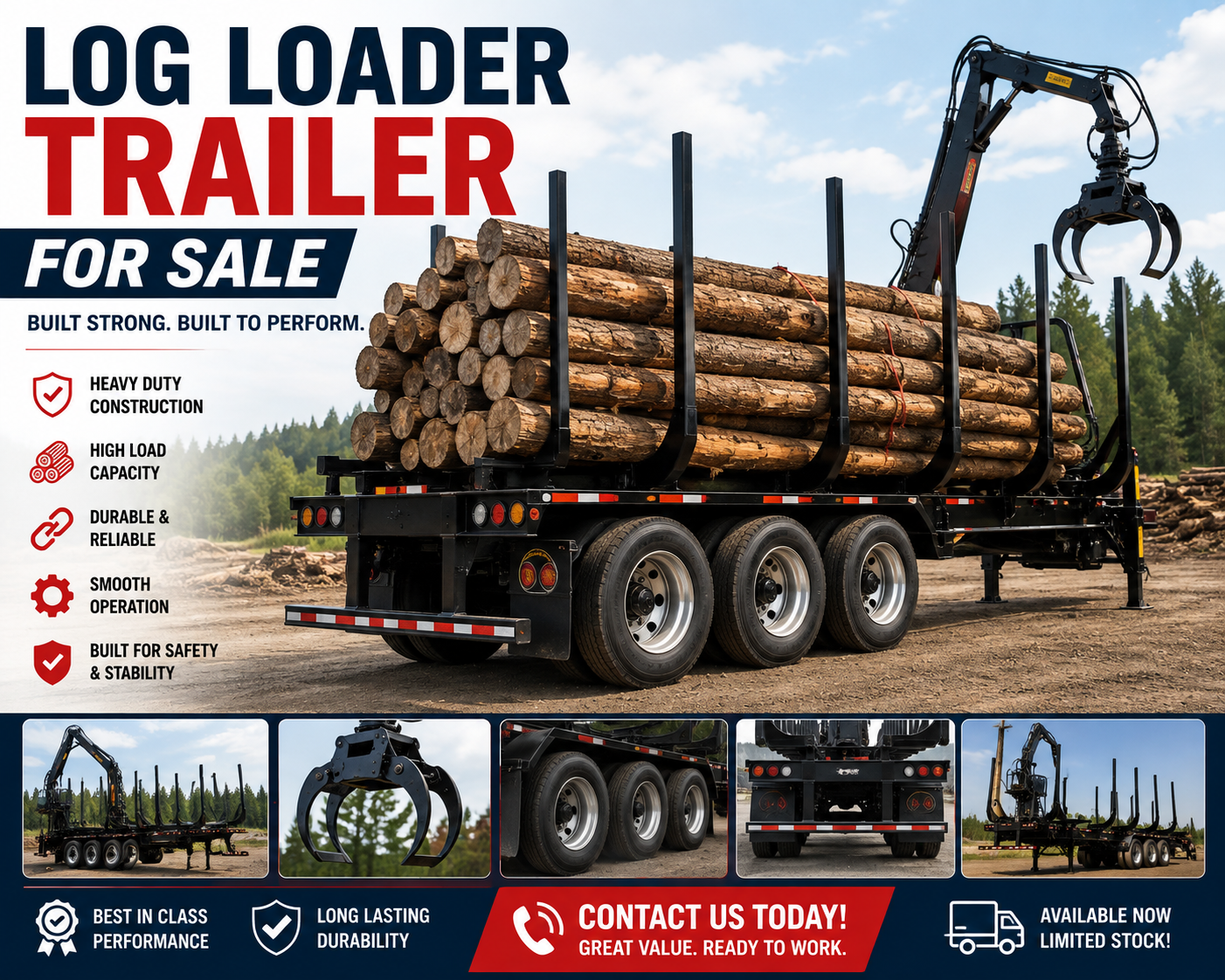
Moving timber efficiently is one of the most important parts of forestry, woodland management, and firewood production. Logs are heavy, awkward, and often located on uneven or difficult terrain, making ordinary transportation methods impractical. A properly selected log trailer can simplify timber movement by providing a dedicated platform for loading, carrying, and unloading logs. Whether the work involves maintaining private woodland or supporting regular timber operations, choosing equipment suited to the workload can improve productivity and create a more organized material-handling process.
However, selecting suitable hauling equipment requires more than looking at its overall size. Operators should consider timber dimensions, terrain, loading methods, towing requirements, maneuverability, construction, and daily workload before making a decision.
Shop the original Trapstar Australia and streetwear collection online. Get a premium Trapstar tracksuit, Hoodie, shirts, shorts, Jacket, with fast & free delivery.
Why Timber Transport Requires the Right Equipment
Freshly cut timber presents unique transportation challenges. Logs can vary considerably in diameter, length, shape, and weight. They may also be scattered across woodland rather than conveniently stacked beside an accessible road.
Using equipment designed specifically for timber helps create a predictable handling process.
Instead of repeatedly moving individual logs using several different methods, operators can collect timber and transport larger loads toward processing, storage, or another designated work area.
Improving the Forestry Workflow
Efficient forestry work depends on coordination between cutting, loading, transportation, and processing.
If timber cannot be removed from the cutting area quickly enough, logs may accumulate and slow other operations. Similarly, inefficient unloading can create delays once timber reaches its destination.
A log trailer can help connect these stages by providing a practical link between where timber is harvested and where it needs to go next.
Consider the Timber You Usually Handle
The characteristics of your logs should influence equipment selection.
Start by evaluating typical log length and diameter. Small woodland material creates different hauling requirements from mature timber with substantial weight and dimensions.
Load variation matters as well. Some operations handle relatively consistent logs, while others regularly encounter crooked, branched, or irregular material.
Equipment should be selected according to normal working conditions rather than occasional ideal loads.
Think About Load Distribution
Correct load positioning is an important part of timber transportation.
Logs should be arranged so that the load remains stable during movement. Poorly positioned timber can affect balance and make towing more difficult, particularly when traveling over uneven ground.
Operators should always remain within the appropriate operating and loading limits of their equipment.
Evaluate Loading Requirements
Getting logs onto the trailer can require as much planning as transporting them.
Manual loading may be unrealistic for larger timber. Consequently, operators handling substantial logs often need an appropriate mechanical loading method.
When considering a log trailer, think about where logs will typically be collected and how they will be positioned for loading.
Reduce Repeated Handling
Every additional movement takes time.
A well-planned setup allows timber to move from the cutting location onto the transport equipment with minimal repositioning. Once loaded, logs should travel directly toward their next destination whenever practical.
Reducing repeated handling can make the entire timber workflow more efficient while decreasing unnecessary physical effort.
Shop authentic Trapstar Clothing in Australia. Hoodies, tracksuits, jackets & safe, secure shopping. Fast Delivery. 100% Satisfaction Guarantee. Secure Payment.
Match the Trailer to the Terrain
Forestry rarely takes place on perfectly smooth surfaces.
Woodland tracks can contain mud, roots, loose soil, slopes, narrow sections, and uneven ground. Equipment that works comfortably on a maintained yard may behave very differently in challenging forest conditions.
Ground clearance, stability, overall dimensions, and maneuverability therefore deserve careful consideration.
For operators researching forestry transport solutions, reviewing a relevant timber handling equipment location can provide another useful reference while planning a complete material-handling setup.
Maneuverability Can Matter More Than Size
Larger carrying capacity can appear attractive, but bigger equipment is not always the most practical choice.
A large log trailer may become difficult to maneuver through tight woodland routes. Trees, gates, narrow tracks, turning areas, and storage spaces can all restrict movement.
Before choosing equipment, examine the routes it will use most frequently.
Assess Access Points
Measure narrow entrances and identify tight corners around the worksite.
Consider where the towing vehicle will turn and whether sufficient room exists for unloading. A practical timber transport system should fit the entire route, not simply the loading area.
Good access planning can prevent operational difficulties later.
Examine Construction and Durability
Forestry equipment often operates in demanding environments. Timber creates substantial loads, while uneven terrain places additional stress on structural components.
For that reason, durability is an important consideration when evaluating a log trailer.
Look at the overall construction and consider whether it is appropriate for the expected workload and operating conditions.
Regular Inspection Is Essential
Even durable equipment needs routine inspection.
Operators should regularly examine relevant structural areas, connection points, wheels, tires, loading components, and other working parts according to the equipment’s operating guidance.
Identifying wear early can help prevent minor maintenance requirements from developing into larger problems.
Plan the Unloading Area
Transporting timber is only part of the job. Logs also need to be unloaded efficiently once they reach their destination.
Before loading, determine where the timber will eventually be placed. The unloading area should offer enough space for safe equipment positioning and future material handling.
If logs are heading toward firewood processing, saw work, storage, or sorting, placing them strategically can reduce unnecessary movement later.
Think About the Entire Operation
The best timber transportation setup works as part of a larger system.
Consider how logs move from standing timber to cutting, collection, transportation, unloading, and eventual processing. Improving one stage while ignoring another can simply move the bottleneck elsewhere.
A well-matched log trailer should therefore complement the towing equipment, loading method, site layout, and downstream processing requirements.
Conclusion
Choosing the right log trailer requires careful consideration of timber dimensions, loading methods, terrain, maneuverability, durability, and unloading requirements. Capacity is important, but practical performance depends on how effectively the equipment works throughout the complete timber-handling process.
By examining actual working conditions before selecting equipment, operators can build a smoother and more organized forestry workflow. The right setup can reduce repeated log handling, improve transportation efficiency, and make moving timber between harvesting, storage, and processing areas considerably more manageable.