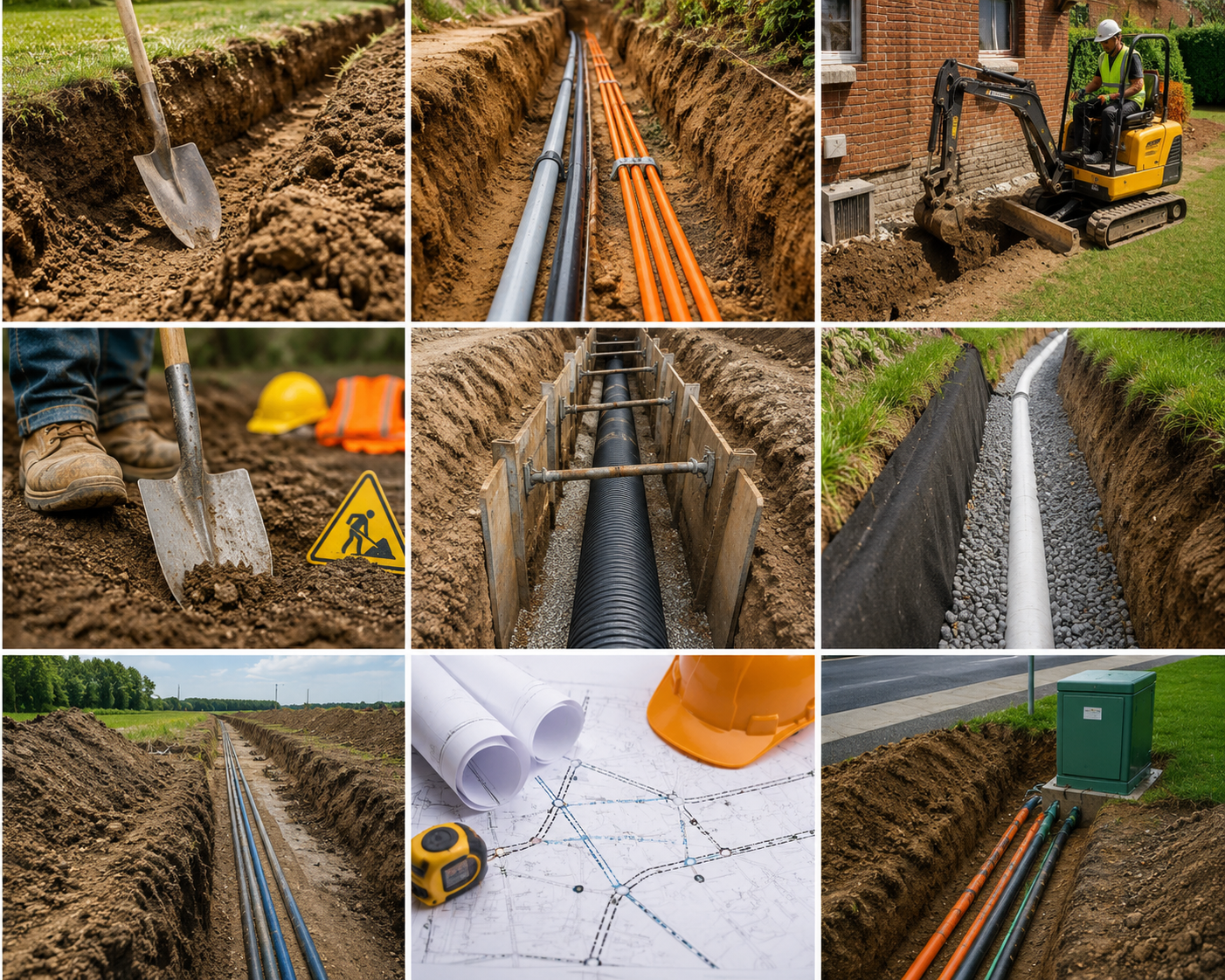
Digging a trench may seem like a straightforward excavation task, but successful results depend on careful preparation. Soil conditions, underground utilities, drainage, nearby structures, and the intended use of the excavation can all influence how the work should be approached. A poorly planned trench can create unnecessary disruption and make installation or restoration more difficult.
Before you dig trench sections for underground utilities, drainage lines, electrical connections, or similar installations, it is important to understand the complete process. Planning the route, assessing the ground, establishing suitable dimensions, and preparing for backfilling can make excavation more efficient while protecting the surrounding property.
Understand the Purpose of the Trench
Every trench should begin with a clear purpose. The intended installation determines many of the decisions that follow, including depth, width, direction, and ground preparation.
A drainage trench, for example, may require a consistent slope so water can move effectively. An excavation intended for underground utility infrastructure may have different depth and clearance requirements.
Starting without these details can result in unnecessary adjustments after soil has already been removed.
Plan the Route Carefully
Marking the proposed path before excavation provides an opportunity to examine the entire work area.
Consider trees, fences, driveways, gardens, walkways, foundations, retaining structures, and other obstacles. The shortest route is not always the best option. A slightly longer path may reduce disruption and make excavation easier.
Good route planning also helps determine where equipment can operate and where removed soil can be temporarily placed.
Identify Underground Utilities
One of the most important steps before starting excavation is identifying existing underground infrastructure.
An open lawn or undeveloped area may still contain electrical cables, water pipes, drainage lines, communication infrastructure, or other buried components. Assuming that an area is clear simply because nothing is visible above ground can create serious problems.
Existing utilities should be properly identified before digging begins. Their locations may influence the final trench route and excavation method.
Avoid Unnecessary Ground Disturbance
Once underground infrastructure has been considered, the excavation area can be kept as focused as possible.
Removing excessive soil creates more material to handle and increases the amount of restoration required afterward. Careful planning allows excavation to remain limited to the area genuinely needed for the installation.
Evaluate Soil and Ground Conditions
Soil conditions can vary significantly, even across the same property. Clay, sand, gravel, compacted fill, rocks, roots, and organic material all behave differently during excavation.
Understanding the ground helps determine how easily the trench can be opened and how stable its sides may remain.
Moisture also deserves attention. Heavy rainfall, poor drainage, or groundwater can make soil less stable and more difficult to manage.
Consider Weather Before Excavation
Weather conditions can influence both excavation and restoration.
Working immediately after significant rainfall may create muddy conditions, complicate soil handling, and increase surface damage from equipment. When possible, scheduling excavation around suitable ground conditions can improve efficiency.
Establish the Correct Dimensions
The trench should be wide and deep enough for its intended purpose without creating unnecessary excavation.
Before workers dig trench sections, measurements should be established according to the installation requirements. These measurements should then be checked throughout the excavation process rather than relying entirely on visual estimates.
Depth can change unexpectedly when ground elevations vary, so regular measurement helps maintain consistency.
Maintain Proper Alignment
A consistent route is particularly important when the trench will contain pipes, conduits, cables, or drainage components.
Unexpected changes in direction can complicate installation and may require additional excavation. Clearly marking the route beforehand and checking alignment during digging can help prevent these problems.
Manage Excavated Soil Properly
Every amount of soil removed from a trench must be handled somewhere. Without advance planning, excavated material can quickly block access or spread across surrounding landscaping.
Suitable soil may be kept organized for later backfilling. However, rocks, roots, construction debris, or unsuitable material may need to be separated.
Keeping the work area organized also makes it easier to move equipment and complete the underground installation.
Backfill the Trench Carefully
Once the underground work is complete, attention shifts to restoring the excavation.
Simply pushing loose soil back into the opening may not provide a stable result. Poorly placed backfill can settle over time, creating depressions along the trench route.
Material should be returned in a manner appropriate for the site and intended surface use. Proper compaction can help reduce future settlement.
Protect Existing Drainage Patterns
Final grading deserves careful attention, particularly around buildings and landscaped areas.
The restored surface should not create low areas where water can collect. It should also avoid directing runoff toward foundations or other vulnerable structures.
Matching the surrounding grade helps the completed excavation blend naturally into the property while maintaining effective drainage.
Complete the Surface Restoration
Restoration methods depend on what existed before excavation.
Lawn areas may need topsoil and reseeding. Gravel areas may require fresh material and leveling, while landscaped sections may need more detailed reconstruction.
After restoration, the trench route should be inspected periodically. Rainfall and seasonal ground movement can reveal minor settlement that was not immediately visible after completion.
Conclusion
Learning how to dig trench areas correctly involves much more than removing soil. Effective excavation begins with understanding the intended installation, planning a practical route, identifying underground infrastructure, evaluating soil conditions, and maintaining accurate dimensions.
Material management, backfilling, drainage, and surface restoration are equally important. When every stage receives proper attention, trench excavation can support underground installations while minimizing property disturbance and reducing the risk of future ground problems.