Facial oil and oily skin may sound like an unusual combination.
If your skin already produces excess oil, you might naturally think that adding another oil will make your face feel heavier or shinier. But not every facial oil has the same texture, and choosing a lightweight option can make a difference.
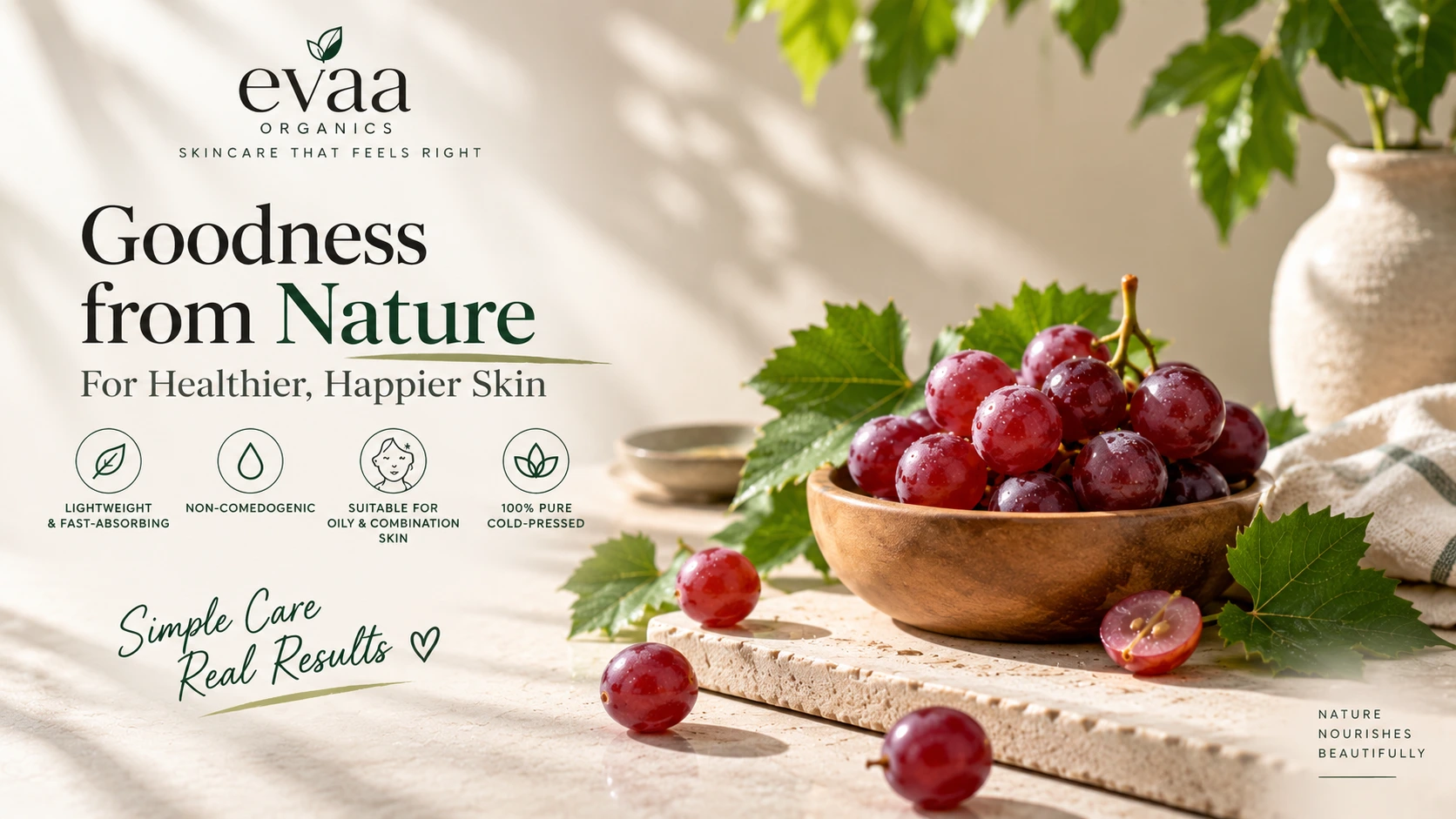
Grapeseed oil is one facial oil that is commonly chosen for its lightweight texture. Evaa Organics Grapeseed Oil is described as a pure, cold-pressed oil that is lightweight, fast-absorbing and non-comedogenic, with the product positioned for oily, acne-prone and combination skin.
The important part isn’t simply adding oil to your routine. It’s understanding how much to use, when to use it and where it fits with your other skincare products.
What Is Grapeseed Oil?
Grapeseed oil is obtained from grape seeds and is used in cosmetic and skincare formulations as a lightweight facial oil.
Compared with some richer oils, grapeseed oil can feel lighter on the skin, which is one reason it is often considered for combination and oily skin routines.
Evaa Organics describes its Grapeseed Oil for Skin as 100% pure and cold-pressed, with a lightweight and fast-absorbing texture.
This makes it an option for people who want to experiment with facial oils without immediately choosing a very rich-feeling formula.
Can Oily Skin Use Facial Oil?
Yes, oily skin can still use a facial oil.
Oily skin refers to the amount of sebum your skin naturally produces. Using a facial oil doesn’t automatically mean your skin will become more oily.
What matters is the product’s texture, how much you apply and how your skin responds.
If you have oily skin, using a few drops rather than applying a large amount can help keep the experience lightweight.
It’s also worth remembering that skincare is personal. A product that feels comfortable for one person may feel too rich for another.
Why Choose a Lightweight Facial Oil?
The texture of an oil can influence how easy it is to use every day.
A very rich oil may feel uncomfortable for someone with oily or combination skin, while a lightweight oil can be easier to incorporate into a routine.
Grapeseed oil is often used in lightweight skincare formats because of its relatively light feel.
The Evaa Organics formula is described as fast-absorbing and non-comedogenic, making it specifically positioned for people looking for daily hydration without a heavy feel.
How to Use Grapeseed Oil on Oily Skin
You don’t need a large amount of facial oil.
A simple approach is:
Step 1: Cleanse your face.
Step 2: Apply your usual water-based skincare products if you use them.
Step 3: Take a few drops of grapeseed oil.
Step 4: Gently press or massage the oil into your skin.
Step 5: Give it a little time to absorb before applying another product.
For Evaa Organics Grapeseed Oil, the product page recommends 3–4 drops and states that it can be used twice daily.
Start with the amount that feels comfortable for your skin rather than assuming more product means better results.
Should You Use Grapeseed Oil in the Morning or at Night?
It can fit into either routine, depending on your preference.
Morning Routine
A simple morning routine could be:
Cleanser → Moisturizer → Sunscreen
If you want to include facial oil, consider where it feels most comfortable in your routine and allow enough time for the product to settle before sunscreen or makeup.
Night Routine
Nighttime can be an easier opportunity to introduce a facial oil because you don’t have to layer it with as many daytime products.
Try:
Cleanser → Hydrating skincare → Grapeseed Oil
If you already use a moisturizer, you can adjust the order based on the textures of your products.
The goal is to avoid creating a routine that feels unnecessarily heavy.
Can Grapeseed Oil Be Used Under Makeup?
A facial oil can sometimes be used before makeup, but the amount matters.
Too much oil can make makeup feel slippery or affect how foundation sits.
The Evaa Organics product page suggests applying 3–4 drops, waiting around 5–10 minutes, and then applying sunscreen and makeup.
If you’re trying this for the first time, start with a small amount and see how your skin and makeup respond.
Grapeseed Oil for Combination Skin
Combination skin can be tricky because different areas of the face may behave differently.
You might notice more oil around the forehead, nose and chin while other areas feel comparatively normal or dry.
In this situation, you don’t necessarily need to apply the same amount of product everywhere.
You can use a smaller amount on oilier areas and adjust according to how your skin feels.
This targeted approach can make a facial oil easier to incorporate into a combination-skin routine.
How Much Grapeseed Oil Should You Apply?
More isn’t necessarily better when it comes to facial oils.
A few drops are generally enough to cover the face.
Evaa Organics recommends 3–4 drops per application on its product page.
Warm the oil lightly between your fingertips and gently press it onto the skin rather than aggressively rubbing your face.
If your skin feels excessively greasy afterward, reduce the amount next time.
Can You Use Grapeseed Oil Every Day?
The Evaa Organics product page positions its grapeseed oil for everyday use and provides a twice-daily usage recommendation.
However, if facial oils are new to your routine, you can start gradually.
Pay attention to how your skin feels after application.
If you experience irritation or discomfort, stop using the product and reassess whether it suits your skin.
For any new skincare product, a patch test can also be a sensible precaution.
Grapeseed Oil and Moisturizer: Do You Need Both?
This depends on your routine and personal preference.
A moisturizer and a facial oil aren’t necessarily interchangeable.
A moisturizer is generally formulated to provide hydration and support the skin’s moisture needs, while a facial oil can add an emollient step to the routine.
You can use both if your skin is comfortable with the combination.
For example:
Cleanser → Hydra Gel Moisturizer → Grapeseed Oil
Or you may prefer:
Cleanser → Grapeseed Oil
There isn’t one universal routine that works for everyone.
If you prefer a lightweight moisturizer, Evaa Organics also offers a water-based Hydra Gel Moisturizer designed to absorb quickly without a greasy or shiny finish.
What Makes a Good Facial Oil for Oily Skin?
When looking for a facial oil, don’t choose based only on marketing claims.
Consider:
Texture
Look for something that feels comfortable rather than excessively heavy.
Ingredients
Check what the product actually contains and whether it suits your preferences.
Application
A dropper can make it easier to control how much product you use.
Your Skin’s Response
Pay attention to whether your skin feels comfortable after application.
Routine Compatibility
Think about whether the oil works with your cleanser, moisturizer, sunscreen and makeup.
These simple factors can help you make a more practical choice.
Common Mistakes When Using Facial Oil
Using Too Much
Applying a large amount can make even a lightweight oil feel heavy.
Applying It Without Considering Your Routine
Think about the texture of your other skincare products and layer them accordingly.
Changing Products Too Frequently
If you change multiple products at once, it becomes difficult to understand what is actually working for you.
Ignoring Your Skin’s Response
If your skin doesn’t feel comfortable with a product, don’t continue simply because it is popular.
Who May Prefer Grapeseed Oil?
A lightweight facial oil may appeal to people who:
- Have oily or combination skin
- Prefer lightweight skincare textures
- Want a facial oil for daily use
- Don’t enjoy very rich oils
- Want a simple oil-based addition to their routine
- Prefer cold-pressed facial oils
Evaa Organics specifically describes its grapeseed oil as suitable for oily, acne-prone and combination skin.
Final Thoughts
Using facial oil doesn’t automatically mean making your skincare routine heavier.
The key is choosing an appropriate texture and using a sensible amount.
Grapeseed oil is a lightweight option that can be incorporated into different skincare routines, particularly if you prefer a fast-absorbing facial oil. Evaa Organics Grapeseed Oil is described as cold-pressed, lightweight and non-comedogenic, with the product positioned for oily, acne-prone and combination skin.
If you’re looking for a lightweight grapeseed oil for oily skin, start with a small amount and see how your skin responds.
A good skincare routine doesn’t need to be complicated. Choose the right texture, use the right amount and stay consistent.